Land Management vs. Ownership
- planejeep
- Jul 1
- 6 min read
Updated: Aug 12
There are currently seven wildfires within one hour of our home. This seems unusually high as we are just entering another peak fire season in California. As I was reviewing the Watch Duty app last night, and clearing the numerous alerts they sent to my phone, I began reflecting on the differences between land management and land ownership.

My great-grandfather owned over 400 acres in Polk County, Missouri. He called that place home well into his 90s—and by “called it home,” I mean he wasn’t rocking on a porch with a glass of sweet tea. No, he was still out on a tractor, he was mending barbwire fences, and tending to cattle like it was 1952. The man didn’t just own land—he worked it. He didn’t hang his property deed in a frame above the fireplace; he wore it on his boots. Mud, sweat, callouses (my dad swears he had the biggest hands he’s ever seen on a man). He had a sense of stewardship that would put most state and federal agencies to shame.
That’s where this begins—because owning land and managing land are two very different things.
After I graduated high school, my parents bought 20-plus acres in Clever, Missouri. Now, “Clever” is both the name of the town and exactly no one's description of the land when they bought it. It was an Ozark jungle: thorn trees, briar patches, poison ivy, and more undergrowth than a poorly maintained beard. You couldn’t walk three steps without needing a machete, a chainsaw, and a gallon of calamine lotion.

But before they even thought about breaking ground on a house, they went to work. Thorn trees—also known as Mother Nature’s tire-shredders—were removed. Briar patches were brush-hogged. Poison ivy became a chemical casualty. It didn’t take a weekend; it took years. And when they were done, most of the land looked like a nature preserve you’d pay to walk through. Some wild sections were left for habitat, but you could actually walk through them without looking like you’d wrestled a bobcat.
That’s land management.
It’s about tending, protecting, improving—not just owning. Landowners should want healthy, valuable, usable spaces, not just an impressive plat map.
In 2010, Cindy and I bought a home in Foristell, Missouri. Most of the property was already developed, but what wasn’t—we rolled up our sleeves and improved. Because, like my great-grandfather, we didn’t just sit on a patio and wave politely at the deer. We managed the land. Because if you care about where you live—and the people and wildlife around you—you manage it.
At one point, my dad and I went full eco-nerd and took pond management classes offered by the Missouri Department of Conservation (MDC). I had MDC agents walk our property, provide advice on soil health, erosion prevention, timber management, and what native trees wouldn’t fold like lawn chairs at the first sign of root rot. We were devoted to investing in our little patch of Earth.
Then... we moved to California. Where you can open your window and give your neighbor a high-five from your kitchen sink. After living with an acre or five between us and the nearest human, this was... an adjustment. But we have made it work—mostly because our backyard faced Chino Hills State Park. No rear neighbors, just open hills, a peak a boo Santa Ana River view, and the promise that we’d never have someone looking into our yard while we were in the pool.

It was the perfect setup—until we learned something important: the State of California owned the land behind us. But they sure as hell didn’t manage it. Not even a little.
By 2020, we’d lived there about a year. And every night, the news led with yet another wildfire. Thousands of acres scorched. Entire neighborhoods lost.
And guess what? Those fires didn’t politely stop at park boundaries. They kept going—because that’s what happens when nobody manages land. Dead trees pile up. Brush gets out of control. Fire breaks don’t exist. And the only land inspection happening is by raccoons and coyotes.
From our backyard, we had a front-row seat to a slice of the 14,102 acres that make up Chino Hills State Park. And what we saw wasn’t stewardship—it was storage. Dead trees lying around like discarded lumber. Invasive vegetation growing like it was in charge. The riverbank almost completely hidden beneath overgrowth unless it was flooding.
So, I did what any responsible (and slightly alarmed) neighbor would do—I called the park. Three voicemails. Zero responses. I wasn’t surprised. I’ve worked with local, state, and federal agencies long enough to recognize the tried-and-true playbook: Ignore it, and maybe it goes away.
Spoiler alert: I didn’t go away.
I did what modern concerned citizens do—I went to social media.

I asked (politely) about their land management strategy. I explained the fire risk. I wasn’t ranting—I was raising a concern like someone who’s taken ecology and fire risk reduction classes. Their response?
They weren’t doing any management.
Why? Because the dead trees were “habitat for beetles.” And the tall, dry, three-foot grass? “Vital for wildlife.”
Beetles! I was worried about my home and neighborhood catching fire due to their negligence, and they were advocating for the beetles.
As I have done with other governmental agencies, I decided to educate. Sharing that Ecology 101 isn’t about letting nature do whatever the hell it wants. It’s about balance. Responsible land management doesn’t mean paving everything or exterminating habitats. It means maintaining ecosystems so they don’t explode in a fiery hell storm.
Their response? Defensive. They insisted “science” backed their inaction. I reminded them that science also tells us what happens when you mix drought, dead brush, and no plan: fire. And when they tried to blame developers for “building too close to the park,” I reminded them of a little rule in communications:
When you point a finger at someone, three fingers point back at you.
And with that, our enlightening exchange ended.
Shortly after, my concerns became reality.



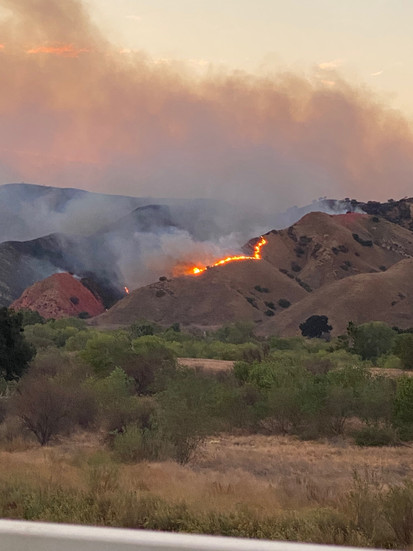

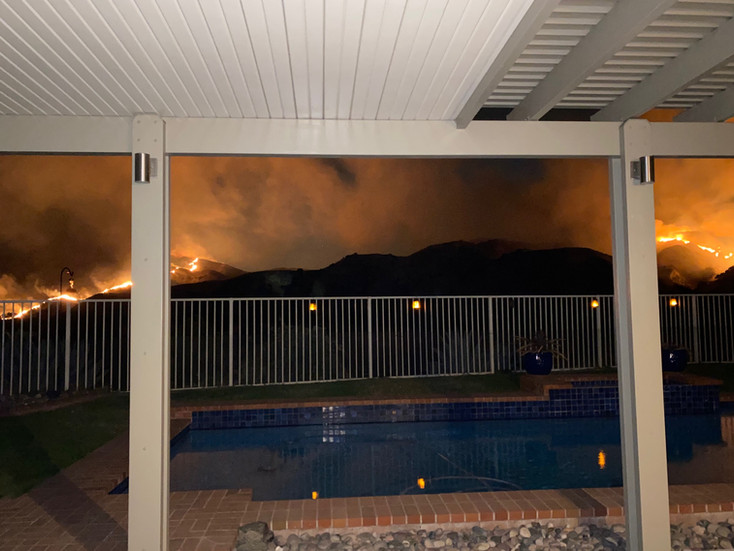

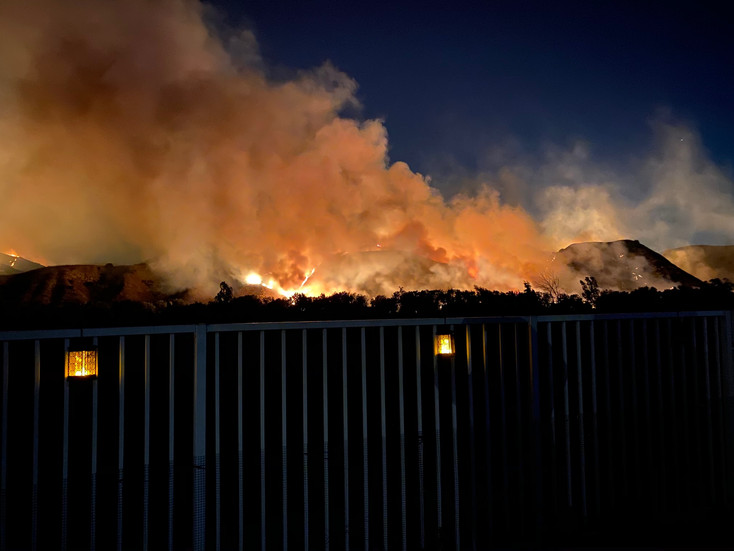


Fire broke out in Chino Hills State Park. It torched over 8,000 acres. At one point, it rolled right down the hill behind our home. I turned to Cindy and said, “If it crosses the river, we’re screwed.” Fortunately, the wind died down. The fire never made it across the overgrown Santa Ana riverbank. But it was close. Too close.
And during all of that? Not one call, email, text, or knock on the door. The State of California, our city, our county, no one reached out. Not even a courtesy, “Hey, hope your house doesn’t burn down.”
Honestly, if I hadn’t been working from home and heard the steady stream of low-flying firefighting aircraft, I probably would’ve found out about the fire during my evening commute—right about the time I was detoured by road closures and flaming hillsides.
Which brings us back to the point of all this:
Land ownership is not land management.
Having your name on a deed means you paid for something. Managing land means you’re investing in it—for yourself, your neighbors, wildlife, and future generations. Whether you’re on 400 acres in Polk County, 20 acres in Clever, or a suburban lot bordering a state park in California, what matters is what you do with it.

Now, let’s be clear—I’m not suggesting we “rake the forest floor” (that was a dumb idea pitched by a dumber man). But I’m also not advocating we just “let nature take its course” in a state where wildfire season now includes spring, summer, and fall. That’s not land management. That’s laziness in a recycled pamphlet. There’s a middle ground. All owners should adhere to certain maintenance practices. If they can’t, it’s time to sell the property to someone who can.
Good land management doesn’t fight conservation—it is conservation. Because no wildlife habitat survives a blaze that started because someone wanted to protect beetles more than homes.
So, if you’ve got land—whether it’s 2 or 30,000 acres—ask yourself:
Are you managing it?
Or just owning it and hoping the beetles come up with an evacuation plan?
Because in the end, only one of those leaves the land better than you found it.
The other? Just leaves behind a smoking crater… and a very irritated neighbor with a blog.


Comments