Are Human Resources, Human?
- planejeep
- May 12
- 11 min read
Updated: Oct 29
Let’s talk about Human Resources (HR)—more specifically, whether they’re still “human” or if they’ve become more of a bureaucratic obstacle course dressed up in khakis and compliance training.
In my 20+ year career, I’ve worked with a wide range of organizations across manufacturing, agriculture, engineering, government, and entertainment. And here’s what I’ve noticed: HR departments tend to grow in size while somehow becoming less effective. I’ve watched teams double (even triple) in headcount only to slow things down, not speed them up. Meanwhile, I’ve completed the exact same tasks—legally, mind you—with fewer people, fewer steps, and far fewer headaches.
A Department Without a Clear Identity
HR has a perception problem. Employees often don’t see HR as a resource for humans—they see it as an extension of upper management. You’re more likely to hear HR repeat policy than advocate for flexibility or fairness. Ask around: many employees see HR as the department that enforces rules, not the one that supports individuals.

Too often, I’ve found myself asking (or hearing others ask), “What does HR actually do all day?” Sometimes it feels like they create work for the sake of working. Mountains of paperwork, long waits for simple requests, endless process loops… all adding to inefficiency. This overemphasis on policy and procedure makes employees feel like they’re just another form to be filed—not people with real, individual circumstances. It becomes hard to justify the department when the only time anyone hears from them is during open enrollment or a policy violation.
Hiring Managers and the Unicorn Myth
Now, not every human resource issue lies with HR itself—sometimes it lands squarely in the lap of leadership or management. This seems to be especially true when looking for, evaluating, and identifying potential talent. Many hiring managers fall into the trap of unrealistic expectations. Too often, I hear about career postings for let’s say a manufacturing marketing manager that requires 10+ years of experience in a specific manufacturing environment. Really? That’s like asking for a decade of experience marketing steel bolts under fluorescent lighting in a clean room.

Time for a reality check. There is nothing uniquely special about your company or your industry when it comes to marketing communications. Everyone likes to think their brand or business model is special, but marketing communications principles and desired outcomes are universal. They transcend industry. There are no university courses on marketing steel bolts under fluorescent lighting in a clean room.
I can say with confidence, if you know how to effectively communicate, you know how to adapt. These skills are transferable. Stop expecting unicorns with niche experience when what you really need is someone who understands audience, storytelling, strategy, and analytics.
And don’t get me started on the job postings that demand “established media contacts in [insert industry here].” That’s not how media relations work. If a reporter trusted you when you were at Employer A, they’re not automatically going to champion you at Employer B—especially if you’re pitching the same message under a different logo. That’s not credibility; it’s fatigue.

These situations are a clear failure of HR. Their department should be the guardrail for these unrealistic expectations. Don't get me wrong—certain roles absolutely require specific credentials. You wouldn’t hire a nurse with a CPA and a dream, but no nursing degree. That’s a lawsuit with a stethoscope. But when job postings start sounding like wish lists of delusional pirates—"Arrr, must have 15 years of experience in a field that’s only existed for five, arrr"—HR needs to step in. If a posting is out of touch, unrealistic, or just plain laughable, HR is responsible for saying something, establishing guidelines, and ensuring situations improve. Hiring managers may think they’re recruiting unicorns, but HR should remind them this is not a fantasy league.
Complexity for Complexity’s Sake?
I recently read that the path to being hired has become more complicated. I’m still unsure if they were advocating or warning that hiring is now the equivalent of assembling IKEA furniture.
According to recent studies, the average corporate job posting receives around 250 applications. Of those applications, only 4–6 candidates are actually invited to an interview. This seems far too few interviews in relation to the number of applicants. Even after weeding out resumes that do not meet baseline requirements (location, salary, resume structure, education, experience), personally, I would want to speak with a minimum of 20 applicants (this is not even an 1/8 of the total received).
Most of the jobs I’ve landed, or interviewed candidates for, started with something radical: a genuine conversation—two actual humans talking, maybe over coffee. They were not a 47-slide presentation, four rounds of panel interviews with people I’d never work with or for, a pop quiz on Excel pivot tables, and a personality test that concluded I’m “emotionally intelligent but suspiciously sarcastic.” Shocking revelation: the results of these tests can be manipulated.

I know—I’ve done it. Sometimes because I really wanted the job. Sometimes because I was bored and wanted to waste the organizations time after a ridiculous interview. Bonus points if the final step in the interview and hiring process involves tracking down my 11th-grade chemistry teacher for a reference. Spoiler: she remembers the periodic table, not me.
Overcomplicating situations too often masquerades as rigor. In reality, it’s just indecision. If the hiring processes were any more bloated, organizations would need a personal trainer and a LinkedIn wellness influencer.
“Human Capital Management”: A Warm and Fuzzy Term for Being a Number
I remember hearing this term for the first time and immediately cringing. It sounded less like something involving people and more like a spreadsheet function in Excel. Congratulations—you’ve successfully reduced your workforce to a cell. At some point, "employees" became "assets," "culture" was downgraded to a quarterly presentation, and “people skills” were rebranded as “soft deliverables.” It's not just corporate jargon—it’s a red flag. Actually, it's a full-blown flashing neon billboard that says: “We see our team not as people, but as resources to be optimized, depreciated, and replaced like a computer operating system.” Human Resources have to be human. People do not like cells.
The current results speak for themselves. According to Gallup, only 23% of employees worldwide are engaged at work. Maybe that’s because they’re being managed like barcodes instead of, you know, humans.
Need more evidence? Companies pour over $366 billion a year into leadership development, yet still can’t seem to retain top talent. Why? Because people don’t quit jobs—they quit bosses, organizations, and CEOs who treat “authenticity” like an optional plugin in the HRIS system. Human Resources, this is your battle, and if you lose it, so will be the hope for your staff.
Does your organization employ a HR professional with a title that sounds like they are optimizing forklift fuel efficiency? Well, then it is time to rethink the approach. People aren’t capital. They’re not "resources," widgets, or budget line items to massage during Q4. They’re human beings—with ideas, quirks, questionable coffee preferences, and one simple request: please stop calling us assets or capital.
One Bad Experience Can Define the Whole Department
HR isn’t always a villain. But it only takes one bad experience to color your entire view. I once had a contractor ask an HR team member about my employment agreement. And guess what? My HR team answered them—with incorrect information. Let me say that again louder for the people in the back: HR answered a contractor’s question about my employment terms—incorrectly.

The individual asking wasn’t my manager. They weren’t even an employee—they were an independent, part-time contractor. In California, employee privacy isn’t just good manners—it’s the law. Between the California Labor Code and the California Consumer Privacy Act (CCPA), employers are prohibited from disclosing employment details without consent. So, when HR answered this contractor’s question about my employment—incorrectly and without asking me first—it wasn’t just poor judgment; it was potentially unlawful.
Experiences like mine reinforce the perception that HR departments aren’t staffed with the most qualified professionals. When poor judgment with unclear boundaries are mixed, it's no wonder so many employees see HR as a liability instead of a resource.
HR Can’t Be Just Admin Work in a People-Centric World
HR often seems overly focused on the administrative side of things—benefits, policies, documentation—while completely missing the bigger picture. Many HR departments don’t seem to understand the actual work of the departments they support, let alone the broader goals of the company. How can you support a team or your people if you don’t know what they do, or what success looks like for them?
And don’t even get me started on the benefits process. Why is it always a yearly fire drill? Every fall, it’s like HR suddenly realizes, “Oh no! People need healthcare again!”—and we all are dragged into a frantic game of “Choose Your Own Deductible” with three confusing PDFs and a webinar that feels like a hostage situation.
Here’s a wild idea: what if you negotiated a multi-year benefits package with a kick-out clause for flexibility? This might stabilize employee costs and reduce stress for everyone involved. But no—too often, HR sticks with the same provider year after year because, “that’s who we’ve always used.” If I’m your long-term vendor and I know you’re not shopping around, I’m squeezing you for every penny while delivering the bare minimum in return—and trust me, I’m not the only one thinking that way. You are not being loyal, you are being lazy. And it’s costing your company and your people more than you realize.
Onboarding That Actually Onboards
We’ve all been there—sitting through a week of endless paperwork, PowerPoints, and enough HR jargon to make your head spin. It’s like HR’s idea of a welcoming party is a five-day paperwork marathon and a couple of hours left to read a company handbook. Yawn.
According to Glassdoor, “a strong onboarding process improves new hire retention by 82% and productivity by over 70%”. So, why is it that onboarding often feels like a DMV visit? It’s time to ditch the snooze-fest and actually onboard new hires in a way that makes them feel like part of the team before they've even learned how to use the copier. Onboarding should be a structured, but also an engaging experience that goes beyond just policies and forms. It should introduce culture and values.
Start with assigning mentors or peer buddies—someone who can actually show new hires the ropes instead of just handing them a stack of forms and saying, “Good luck!” And don’t forget to set clear role expectations and success metrics. New hires shouldn’t be left wondering if they’re doing things right or just guessing based on their manager's cryptic nods.
Transparent, Fair Performance Management (and Less of the “Check-the-Box” Review)
Performance reviews suck. We all know it. HR, you can’t hide behind the once-a-year “check-the-box” performance review anymore. “But we’ve always done it this way!” Yeah, well, so did Blockbuster, and look how that ended.
HR should promote, develop, launch and embrace continuous feedback systems that don’t make employees feel like they’re in an interrogation room every 12 months. If an employee overperforms, reward that employee. Dont wait until the next annual review period. Reviews and recognitions should not be about sitting down with a rating scale and an awkward silence. These meetings should be about guidance, support, and growth. You’re doing great! (But seriously, here’s how you can be even better.)
Can we please put the 1–4 (or 5… or 10… or whatever arbitrary number HR picks out of a hat) rating system out to pasture? You know the one—where the top score for your annual review technically exists, but lives in a mystical land right next to the unicorn hires and budget increases. And if you do manage to navigate Mordor and earn that elusive perfect score? Congrats! You’ve now been cursed with the “You've Peaked” label and are automatically disqualified from greatness again. How precious.
Seriously, what’s the point of a top rating if no one’s allowed to touch it—or touch it more than once? HR, build a system that actually rewards progress, celebrates growth, and doesn’t punish people for being awesome. Performance reviews too often feel less like feedback and more like an annual game of Corporate Hunger Games—may the odds be ever in your mid-range favor.
Research backs my thinking, “only 14% of employees strongly agree that performance reviews inspire them to improve” (Gallup). So why are you doing them the same way, year after year, and wondering why turnover is skyrocketing? Maybe it’s time to rethink the process or did your personality not test well in that category?
A quick side note: the average employee tenure in the U.S. is 4.1 years. And I’m pretty sure that’s because they spent three of those years dreading the annual
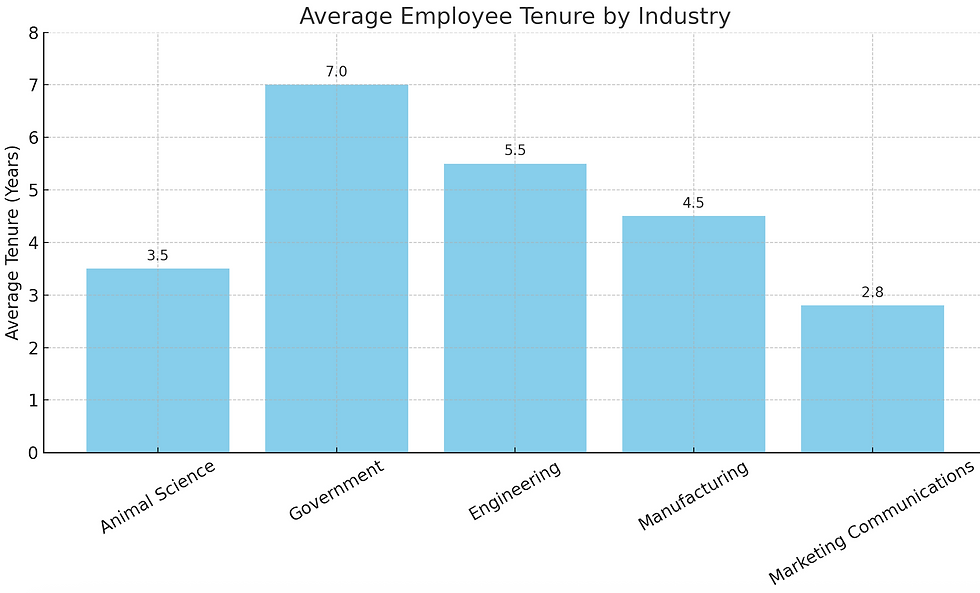
performance review.
Mental Health and Wellbeing: Let’s Not Be the Last to Know

76% of employees experience burnout. That’s almost 8 out of 10 people feeling like they’re one “urgent request” away from a mental breakdown. And no, HR, the answer isn’t just a generic “We have an EAP program—check out the pamphlet!” Offering mental health support is no longer optional; it’s a necessity.
HR departments should be stepping up here and prioritize mental health. Seriously—if someone is experiencing burnout, a couple of vacation days isn’t going to do the trick. It’s like saying, “Hey, your car is overheating. Take a 10-minute break, and it’ll be fine.” Not quite.
Then there is workplace flexibility. If someone’s commute is turning them into a stressed-out zombie every morning (I know, I have been one), why not let them shift their hours? If their average commute goes from an hour at 8:00 AM to 30 minutes at 9:00 AM—use that big HR brain and let staff make the decision. They are an adults, right? This is called being human and compassionate. Adjust work hours to reflect when employees have the greatest impact and actually show up as their best selves.
Offering access to therapy, mindfulness resources, and burnout-prevention tools are not just nice-to-haves—they’re must-haves. HR should help their partners ensure success. If HR wants to be the hero, stop offering “Wellness Wednesdays” and start offering real, ongoing support, not cookie cutter pamphlets.
Manager Capability Building: Time to Stop the Madness
Offer leadership development programs, but make sure they’re actually real-world applicable. Please don’t make them some dusty training manual that no one ever reads. Get an expert—someone who actually knows what they’re talking about—so they can deliver content that sticks. We’ve all heard that one HR person trying to give leadership advice while their own experience is limited to “I once managed a team of 3 interns.” This is not quite the expertise your teams are seeking.
And let’s not forget coaching resources. If HR really wants to help managers succeed, give them the tools and support they need to manage effectively. This doesn’t mean throwing them into leadership positions and saying, “Good luck!” It means offering resources, mentorship, and a framework for effective people management.
Also, how about offering employees coursework and learning opportunities during business hours? That’s right—during business hours. No one should be expected to take a class on their own time. And hey, while we’re at it, why not implement an eLearning system and offer employees learning subscriptions? Companies that offer development opportunities see 34% higher retention rates (LinkedIn Learning). It’s not just a nice perk—it’s an investment in the future.
So, What’s the Verdict?
Human Resources should be the strategic partner within every organization. They should serve as the bridge between leadership and employees, aligning personal growth with company goals, and building trust. Currently, too many HR departments have become compliance-first, people-second.

HR doesn’t need to be all warm and fuzzy, but it does need to be competent, responsive, and—dare I say it—human. If your employees view HR as a detached rule enforcer instead of a partner, that’s not a perception problem. That’s a function problem.
HR, you can do better. You have to do better. And you have to lead the way—by listening, learning, and yes, sometimes admitting you are part of the problem.
And if anyone in HR is offended by this post, don’t worry, you are probably not alone. I assure you it’s nothing personal. Unless, of course, you wrote that manufacturing marketing manager job posting.


Comments